GHK-Cu Research in Copper Transport and Extracellular Matrix Remodelling
GHK-Cu research overview — copper coordination chemistry, matrix remodelling and gene expression research, with ISO 17025 accredited purity published. Research use only.

43 research overviews, comparisons and handling guides — mechanisms as studied in preclinical and laboratory research, with the measured purity and published certificate for each compound we stock.
GHK-Cu research overview — copper coordination chemistry, matrix remodelling and gene expression research, with ISO 17025 accredited purity published. Research use only.
5-Amino-1MQ research overview — NNMT enzyme inhibition, the NAD+ salvage pathway and adipocyte metabolic research, with structure and measured purity published. Research use only.
How and why research peptides are co-formulated — fixed ratios, shared handling, confounding, and when a blend is the wrong choice. Certificates published. Research use only.
Thymalin research overview — a thymic peptide complex studied in immune regulation, and how a complex differs from a defined single peptide. Research use only.
DSIP (delta sleep-inducing peptide) research overview — sleep architecture models, circadian signalling and an unusually unresolved mechanism. Research use only.
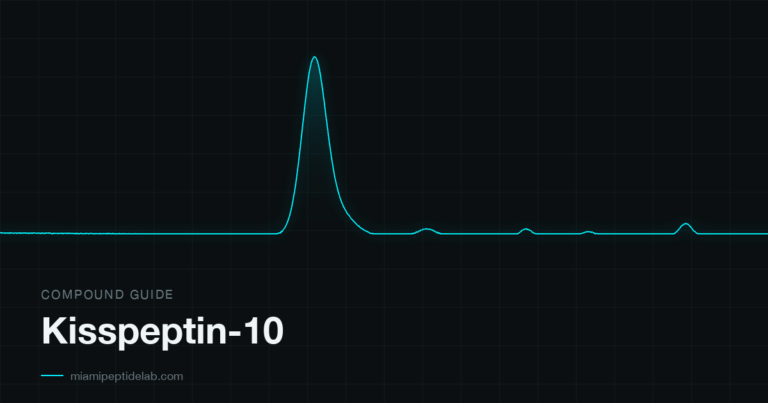
Kisspeptin-10 research overview — KISS1R agonism, GnRH neuron signalling and the upstream control of the reproductive axis, with measured purity published. Research use only.
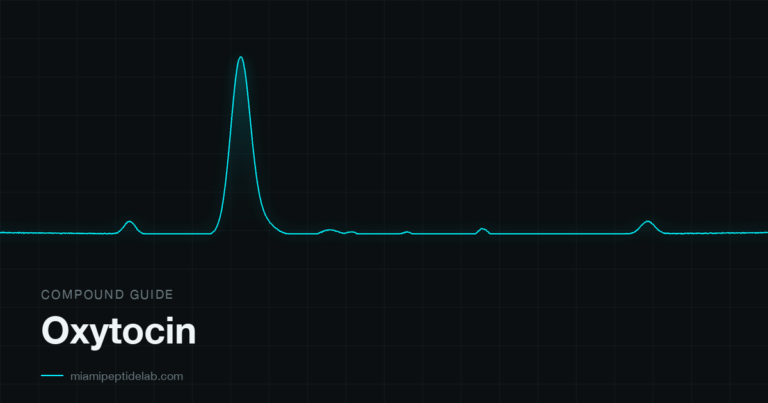
Oxytocin research overview — a nonapeptide studied across social behaviour and neuroendocrine models, receptor pharmacology and vasopressin cross-reactivity. Research use only.
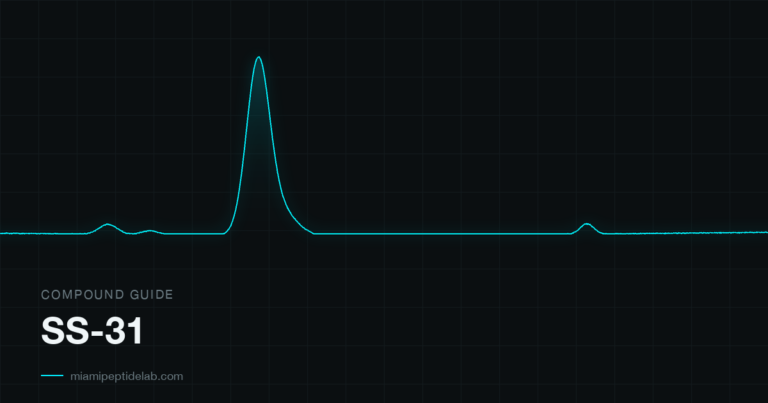
SS-31 (elamipretide) research overview — cardiolipin binding at the inner mitochondrial membrane, cristae architecture and measured purity published. Research use only.
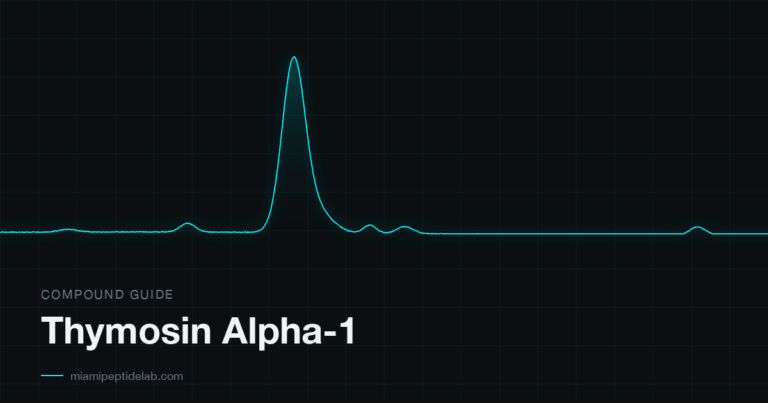
Thymosin alpha-1 (Tα1, thymalfasin) research overview — thymic peptide immunology, Toll-like receptor signalling and T-cell maturation. Independently tested. Research use only.
IGF-1 LR3 (Long R3 IGF-1) research overview — the Arg3 substitution, IGFBP evasion, receptor signalling and measured molecular weight from our certificate. Research use only.
GHRP-2 (pralmorelin) research overview — ghrelin receptor agonism, comparison with selective secretagogues, structure and identifiers. Research use only.
GHRP-6 research overview — the original growth hormone releasing hexapeptide, ghrelin receptor agonism and appetite signalling, with identifiers published. Research use only.
Sermorelin research overview — GHRH(1-29), the minimal active fragment, receptor mechanism and comparison with longer analogues. Independently tested. Research use only.
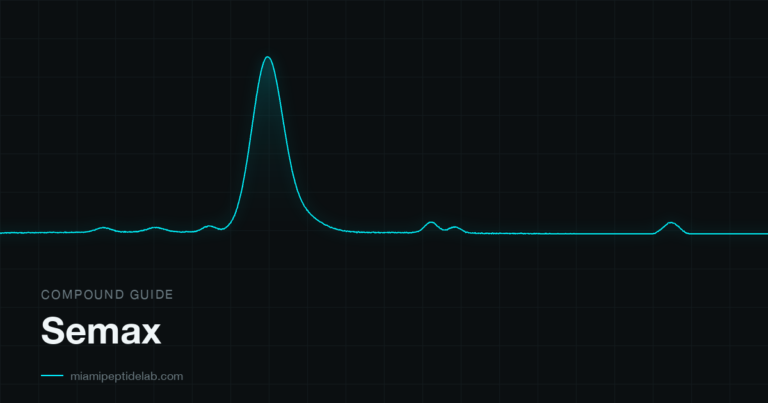
Semax research overview — an ACTH(4-10) analogue studied in BDNF, neurotrophic and nootropic research, with structure and measured purity published. Research use only.
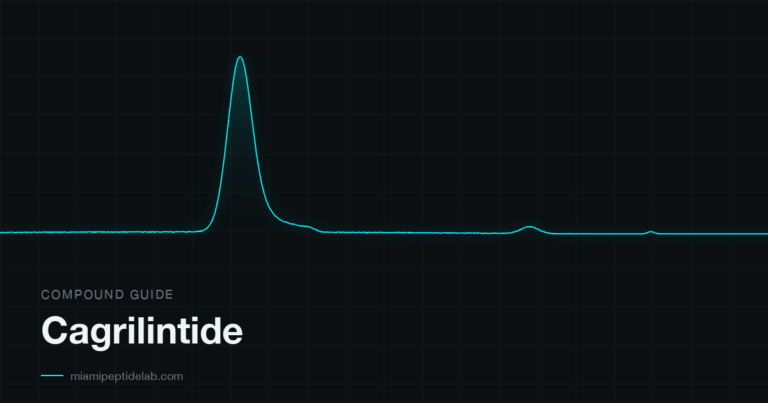
Cagrilintide (AM833) research overview — a long-acting amylin analogue studied alongside GLP-1 agonists, with structure and measured purity published. Research use only.
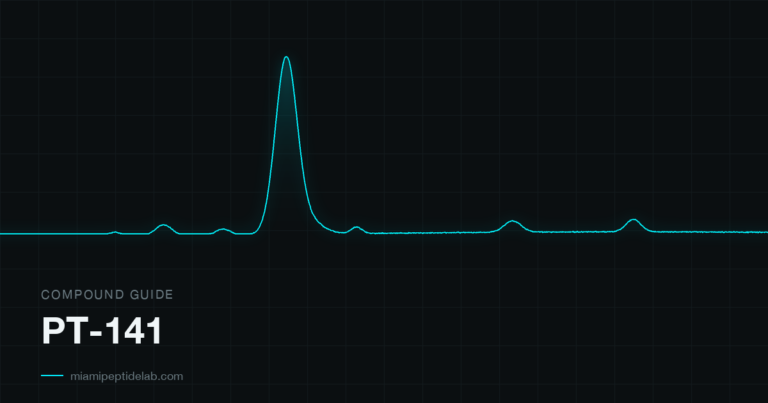
PT-141 (bremelanotide) research overview — MC3R/MC4R selectivity, derivation from a Melanotan-2 metabolite, structure and measured purity published. Research use only.
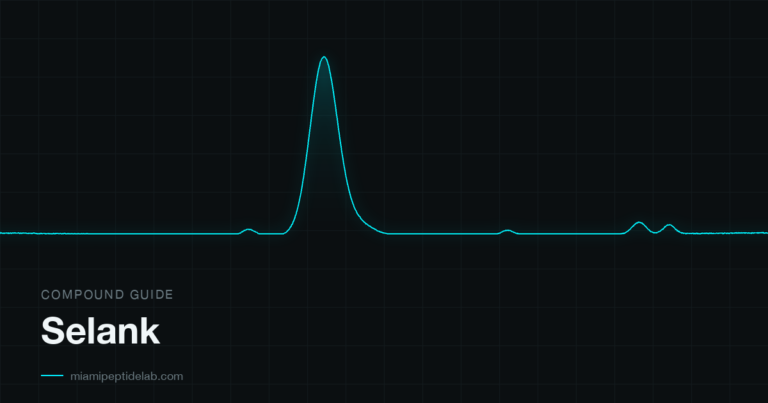
Selank research overview — a synthetic tuftsin analogue studied in anxiolytic, BDNF and immunomodulatory research, with structure and measured purity published. Research use only.
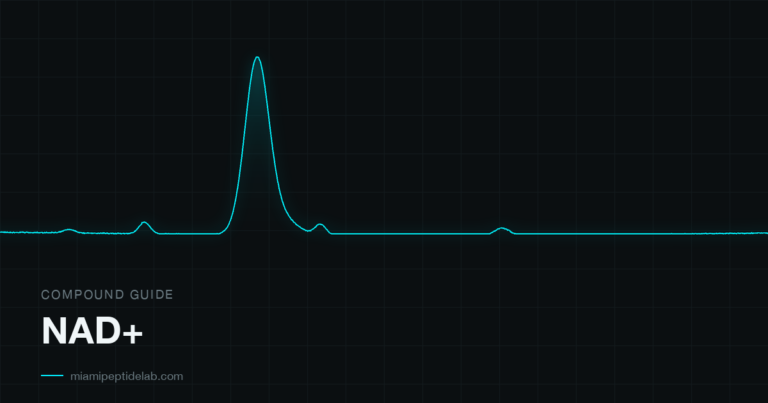
NAD+ research overview — redox cofactor chemistry, sirtuin and PARP consumption, mitochondrial metabolism, with measured purity from our published certificate. Research use only.
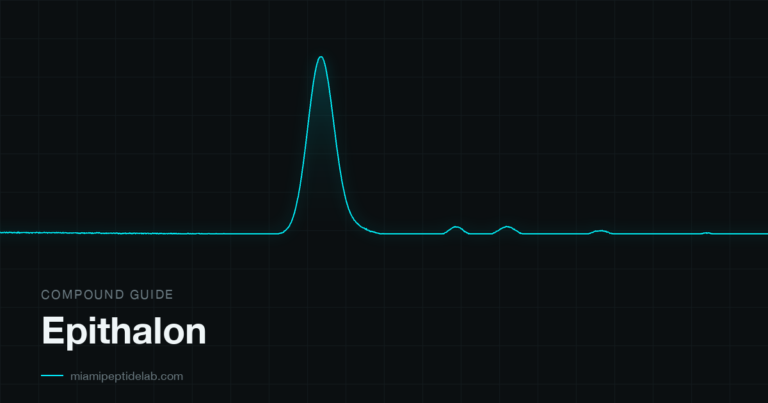
Epithalon (AEDG) research overview — a synthetic tetrapeptide studied in telomerase and pineal-regulation research, with structure and measured purity published. Research use only.
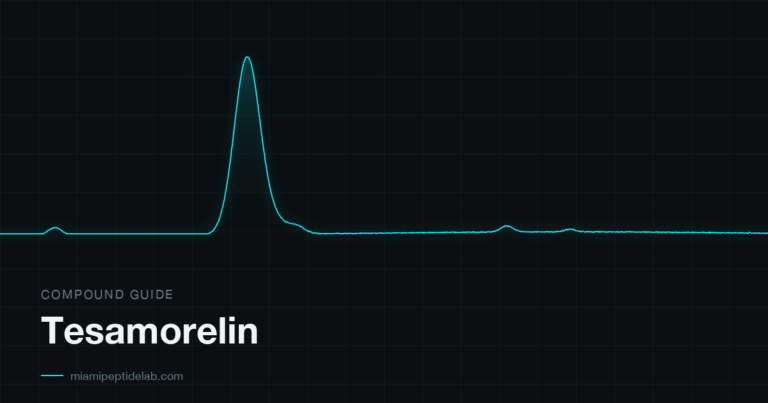
Tesamorelin (TH9507) research overview — stabilised GHRH analogue, receptor mechanism, metabolic research context, structure and measured purity. Research use only.
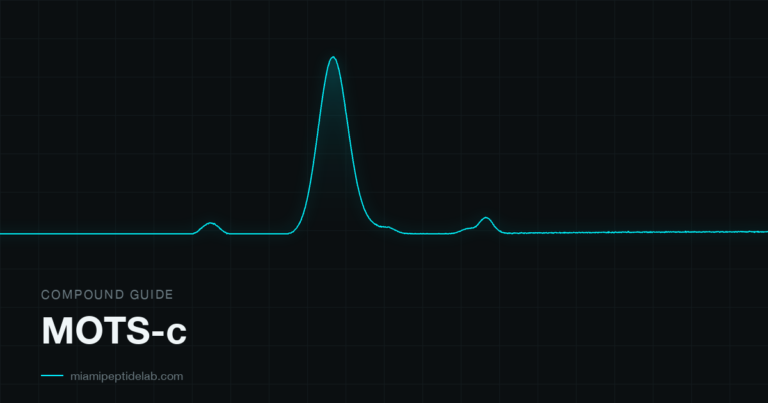
MOTS-c research overview — a mitochondrial-derived peptide encoded in the 12S rRNA, AMPK signalling and metabolic research, with measured purity from our published certificate. RUO.
HCG research overview — LH-receptor agonism, gonadal-axis models, glycoprotein structure and handling. Independently tested, certificates published. Research use only.
Melanotan-2 (MT2) research overview — melanocortin receptor agonism, pigmentation models, structure and measured purity from our published certificate. Research use only.
Semaglutide engages one receptor, tirzepatide two, retatrutide three. A side-by-side research comparison of the three most-studied incretin analogues, with measured purity for each.
KPV is a tripeptide fragment of alpha-MSH studied in anti-inflammatory and gastrointestinal research.What is KPV?KPV is a tripeptide — lysine-proline-valine — corresponding to the C-terminal (11–13) fragment of alpha-melanocyte-stimulating hormone (α-MSH). It…
A Certificate of Analysis (COA) is the lab document that verifies what is actually in a peptide vial. Learning to read one is the single best way to evaluate a research-peptide source.What…
Proper storage is what keeps a research peptide stable and usable. Requirements differ before and after reconstitution.Lyophilized (powder) storageSealed, freeze-dried vials are the most stable form. Store them cold and protected from…
Ipamorelin is a selective growth-hormone secretagogue and ghrelin-receptor agonist — valued in research for releasing growth hormone with minimal effect on other hormones.What is ipamorelin?Ipamorelin is a synthetic pentapeptide and a selective…
CJC-1295 is a growth-hormone-releasing hormone (GHRH) analog studied as a research secretagogue — available in a shorter-acting no-DAC form and a long-acting DAC form.What is CJC-1295?CJC-1295 is a synthetic analog of growth-hormone-releasing…
GHK-Cu research overview — copper coordination chemistry, matrix remodelling and gene expression research, with ISO 17025 accredited purity published. Research use only.
Recovery peptides are studied in tissue-repair, cell-migration, and regenerative research. The class centers on a few well-characterized compounds that are often studied together.The compoundsBPC-157 — gastric-derived repair peptide (overview)TB-500 — thymosin β-4…
GLP-1 and incretin peptides are the most-researched class in metabolic science. They act on incretin receptors — GLP-1, GIP, and glucagon — studied in glycemic, metabolic, and appetite-regulation research.The compoundsSemaglutide — GLP-1…
Research peptides are short chains of amino acids used in laboratory research to study specific biological pathways. This guide covers the main categories we carry, how they are studied, and how to…
Tirzepatide is a dual GIP and GLP-1 receptor agonist — a "twincretin" that is among the most-studied metabolic research peptides for its combined incretin action.What is tirzepatide?Tirzepatide (development code LY3298176) is a…
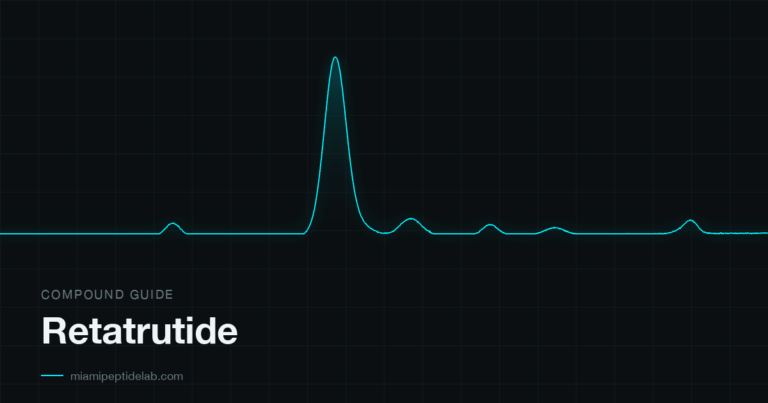
Retatrutide is a triple GIP / GLP-1 / glucagon receptor agonist — the "triple-G" peptide that has become one of the most-studied newer compounds in metabolic research.What is retatrutide?Retatrutide (development code LY3437943)…
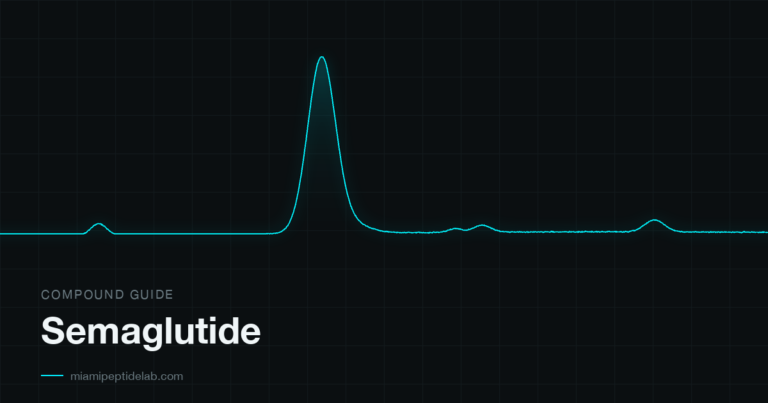
Semaglutide is a long-acting GLP-1 receptor agonist and one of the most extensively studied incretin analogs in metabolic and appetite-regulation research.What is semaglutide?Semaglutide is a synthetic analog of human glucagon-like peptide-1 (GLP-1),…
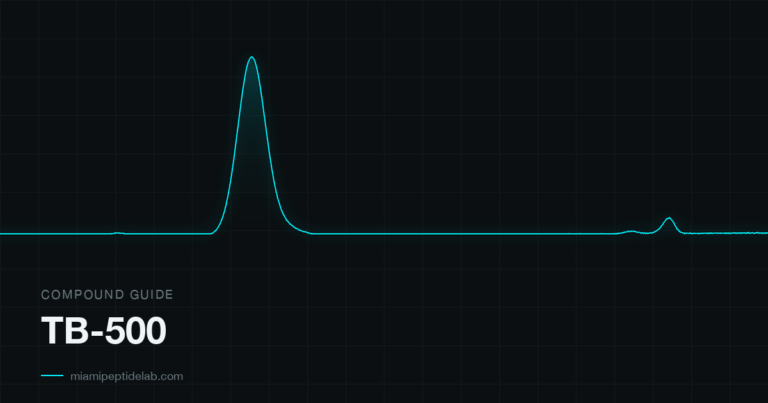
TB-500 is a synthetic fragment of thymosin beta-4 studied in tissue-repair, cell-migration, and angiogenesis research — and one of the peptides most often paired with BPC-157.What is TB-500?TB-500 is a synthetic peptide…
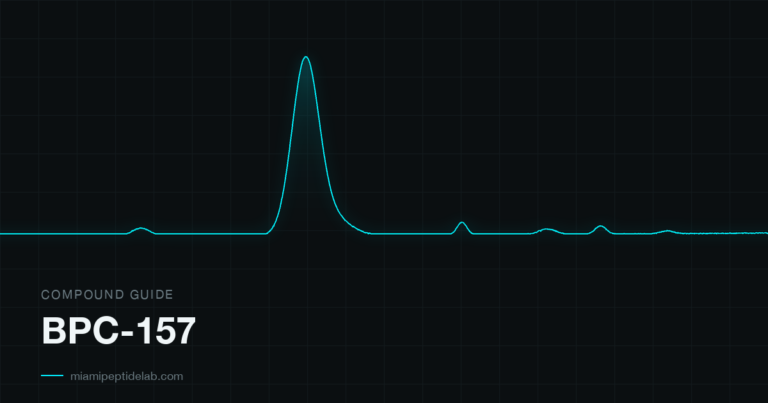
BPC-157 is one of the most extensively studied peptides in preclinical tissue-repair research — a stable synthetic pentadecapeptide investigated across gastrointestinal, tendon, and angiogenesis models.What is BPC-157?BPC-157 (Body Protection Compound-157, also seen…
Use this free peptide reconstitution calculator to find your solution concentration and exact transfer volume. Enter the amount of peptide in the vial, how much bacteriostatic water you are adding, and your…
Semaglutide and tirzepatide are the two most-researched incretin peptides in metabolic science. The core difference: semaglutide targets one receptor (GLP-1), while tirzepatide is a dual agonist that engages both GIP and GLP-1…
Retatrutide and tirzepatide are both multi-receptor metabolic research peptides — the difference is how many receptors they engage. Tirzepatide is a dual GIP/GLP-1 agonist; retatrutide adds a third target, the glucagon receptor,…
Reconstituting a lyophilized research peptide means dissolving the powder in bacteriostatic water so a precise volume can be transferred for research. Here is the standard laboratory procedure, plus a calculator to work…
BPC-157 and TB-500 are the two most-studied recovery peptides, and researchers often compare — or combine — them. The short version: BPC-157 is most associated with localized tissue-repair and gastrointestinal research, while…
Every compound we stock is independently tested and every certificate is published in full. Browse the catalogue or see the full price list.