
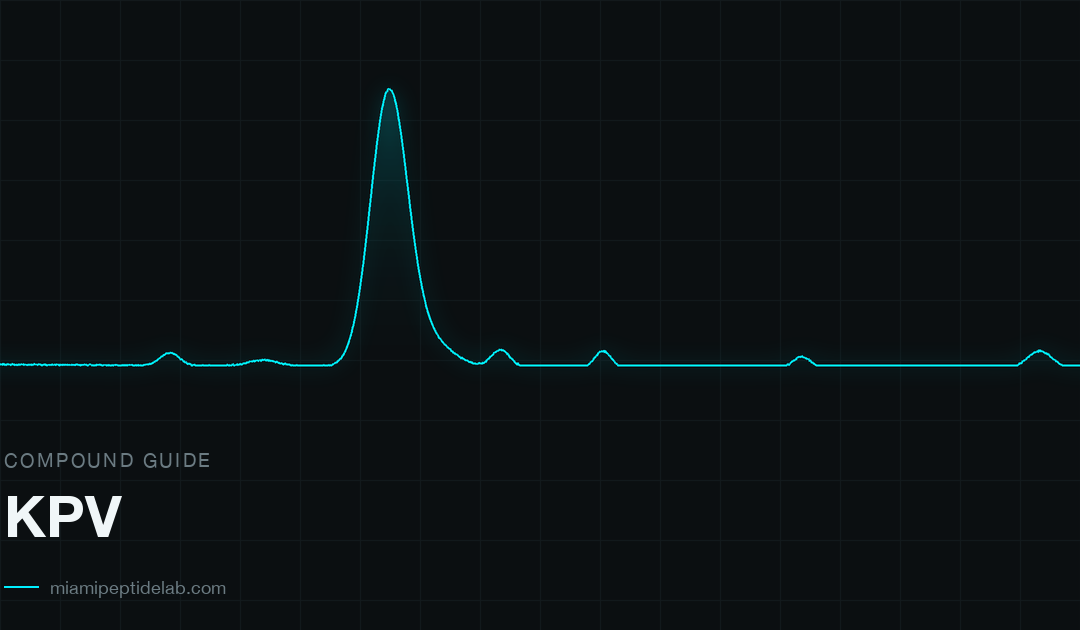
KPV is a tripeptide fragment of alpha-MSH studied in anti-inflammatory and gastrointestinal research.
What is KPV?
KPV is a tripeptide — lysine-proline-valine — corresponding to the C-terminal (11–13) fragment of alpha-melanocyte-stimulating hormone (α-MSH). It retains much of the anti-inflammatory research interest of the parent hormone in a small, stable fragment.
- KPVLys-Pro-Val, the α-MSH C-terminal tripeptide
- Intracellular — NF-κBActs without melanocortin receptor binding
- Reduced NF-κB nuclear translocationDownstream cytokine transcription
- Inflammation modelsColitis and cell-culture studies
Mechanism as described in published research. Nothing here describes an effect in a person — these compounds are supplied for laboratory research use only.
How KPV is studied
In laboratory and model systems, KPV is investigated for anti-inflammatory signaling and gastrointestinal research:
- Anti-inflammatory pathways, including work on NF-κB signaling.
- Gastrointestinal / gut-barrier models — including transport research via PepT1.
- Melanocortin-pathway studies.
Forms & handling
KPV is supplied lyophilized and reconstituted with bacteriostatic water; store cold and protected from light. See the storage guide and reconstitution guide.
Commonly studied alongside
KPV is often co-studied with BPC-157 in gut research and appears in the KLOW blend. See the healing & recovery guide.
Frequently asked questions
What is KPV?
KPV is a tripeptide (lysine-proline-valine) corresponding to the C-terminal fragment of alpha-MSH, studied in anti-inflammatory and gastrointestinal research.
What is KPV studied for?
In model systems it is investigated for anti-inflammatory signaling (including NF-κB) and gut-barrier research. These are research directions, not human outcomes.
What is KPV studied with?
It is often co-studied with BPC-157 in gut research and appears in the KLOW blend.
Is KPV lab-tested?
Yes — every lot is lab-tested to a 99%+ purity standard with a batch-specific Certificate of Analysis published in full.
Why researchers order from Miami Peptide Lab
- Independently tested every lot — the batch Certificate of Analysis is published in full, free to read.
- Ships from Miami and across the US in 24–48 business hours with tracking, in discreet cold-chain packaging.
- Buy-more-save-more bundle pricing on every vial, plus a reship-or-refund guarantee.
Research use only
All products referenced here are sold strictly for laboratory and research use. They are not intended for human or animal consumption, nor for any therapeutic, diagnostic, or cosmetic use, and must be handled only by qualified professionals in an appropriate research setting.